
Lowering phosphate

TTTony

Active Member
Market
Messages
138
Reaction score
205
Location
Cumming
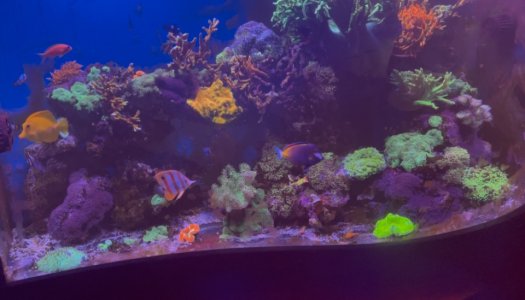
I’ve got w 95 wave gallon set up for about 6 years now in Georgia , fully packed with LPS some crusting corals bubbles and hammers, giant green softies, a bunch of growing red digiti, and a few anemones

quite a few fish an original yellow tang , 1 powder brown, ,2 chromis, 1 bangaii cardnal, 3 blue eyed anthias,, 3 snow clowns , 2 small black clowns , 1 flame, 1 coral beauty

just can’t seem to get the phosphate down. I used to have more growth before I added the Apex and the filter socks, and the radions.
Everything is healthy, ALK is stable and dosed , but just not growing to the point of making new coral heads.
Besides the chemical that kills yellow TANGS anything else?

I do 15 water gallon changes once a month don’t have much room for a GFO reactor, but I’m probably gonna add one
 
I have the same questions @shanepike. What are your levels and what are you testing with? Also they do make pretty small reactors for GFO both internal and external.

IMO GFO is the easiest and safest way to lower phosphates. Can you lower the amount you feed? Also, check your RODI to make sure phosphates aren’t sneaking in from your RODI water.
 
I have the same questions @shanepike. What are your levels and what are you testing with? Also they do make pretty small reactors for GFO both internal and external.

IMO GFO is the easiest and safest way to lower phosphates. Can you lower the amount you feed? Also, check your RODI to make sure phosphates aren’t sneaking in from your RODI water.
I’m using a new high range Hanna with test kits good to the end of this year. I’m getting readings from .25 .45, nitrates are 0, alk is around 9.5 calcium 1420.
I’m sure the reason because the rocks in there are over 10 years old have been in several of my systems , I’m slowly vacuuming the gravel. I’m just amazed, everything is healthy and vibrant here, but just not growing new heads of corals and spreading as in the past before the high tech high-tech set up.
 
Is the tank new using older rock or is the tank and rock been established?

If things look healthy then don’t sweat it too much. I would check the RODI to make sure it’s not adding phosphates and add GFO reactor if you can.
 
I had this same issue with my old tank. I came to the conclusion as long as you dont have excessive algae growth and corals are happy, dont bother trying to fix it. Your tank will produce phosphates from fish waste, uneaten foods, etc. Especially will be more noticeable in older tanks.

My guess is if you wanted to lower it, cut back on feeding, siphon sandbed section by section, clean sump, large waterchange, remove any waste/detritus. However I found this just caused more problems in the past, and coral growth slowed even more. Atleast In my experience. Eventually I stopped testing phosphates entirely.
 
The conventional recommendation for water changes for maximum (economical, reasonable and effective) nutrient (NO3 & PO4) + toxin export is 10% weekly, and, according to some folks, once a month, do a 20% instead. Personally though I won't do more than 50% changes for anything but an emergency: I have unquestionably killed livestock - salt and fresh - with water changes larger than that. See this article for more in-depth detail.

Also, according to this article, when PO4 gets too high, itwill precipitate onto the aragonite on your liverock, so you can do a water change, test later to see the number has gone down... and then it will go back up as it seeks balance again, even if you haven't done something to add more PO4. This is just one of the reasons for doing 10% weekly, rather than (larger or smaller) changes once or twice a month.

Phophate-E is one option, if you've got PO4 issues. I never had luck with RowaPhos or PhosGuard when I tried them, but that was probably owing to not having an ideal place in my AIO filter system for either: used with the right flow in the right reactor or sump section, you might have better luck than I did.

But, as @Justin Ranke said, I wouldn't worry about chasing the numbers too hard towards some specific value, as long as everything in the tank is happy otherwise and there's not a ton of algae.
 
If your new saltwater closely matches your tank’s current parameters (temperature, salinity, alkalinity, calcium, magnesium, and pH), then a water change mainly reduces nitrates and phosphates, with only minimal impact on other elements. Because of that, large water changes (even 50–75%) can be done safely without causing issues, as long as everything is matched properly.

If you perform a large water change and nutrient levels don’t drop much, the likely source is buildup in the sandbed or rock.
A 10% weekly water change will only reduce nutrients by about 10% each time (assuming your RODI water is truly 0 nitrates/phosphates).

Smaller changes are usually recommended for stability, but if your parameters already match your salt mix, larger changes are simply a more effective way to lower nutrients.

That said, in older tanks, avoid disturbing the sandbed during large water changes, since releasing trapped waste can quickly degrade water quality and become harmful.
 
I’m getting readings from .25 .45, nitrates are 0
Could that nitrate level be your problem? I don't know anything about euphyllia, so that's an honest question, but I know my zoas would be struggling in a tank with no nitrates.
 
Back
Top