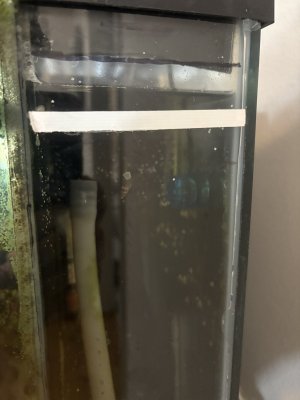
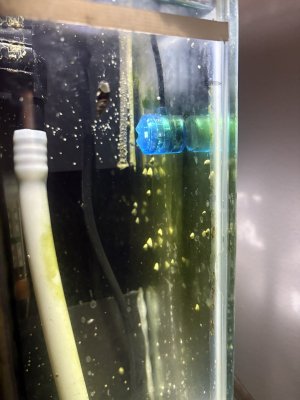
Yep, that's an optical sensor and from doing some searches it sounds like it's a common problem (although all the mentions of it I see are issues with
big snails like Turbos).
This sounds like the best solution unless there is some way you can screen that section so that they can't get in there in the first place:
View attachment 110762
For the record,
do not resin print anything for a fish tank, especially not a reef tank!
Whoever wrote that recommendation... should not be writing recommendations on this particular subject. Aside from
maybe specialized medically-certified dental (or "bio-compatible") resins intended for human use - which most hobbyist resin printers can't cure anyway - there are/were no other types of resins that are even
remotely reef-safe. In fact from what I can find there are virtually no peer-reviewed studies on the subject of medical resins in marine environments at all, and of the few there are, they're focused on acute toxicity, and not long-term use. Any "safety" is only
assumed because it's theoretically safe for human use. Even
then there aren't even any
true long-term safety studies on any of
those because they only started being used in the 2010's. In fact, while many of the "bio-compatible" resins pass
initial safety tests, there are studies showing that factors like aging and physical/chemical stress in the oral environment can lead to the release of monomers over time: and those studied time frames are usually 2 years at the maximum.
Those resins are also WAY more expensive than regular resins.
Caveat: some/most standard resins can
theoretically be made reef-safe
if you cure the ever-loving daylight out of it, and then do a
thorough job of coating the part in a marine-safe epoxy... but ain't nobody got time for that!! 30 - 90 minutes worth of
pre- and post-processing time for
each printing run,
and then you have to epoxy it, and in a way that won't look terrible? Hard pass. Resin's primary benefit is high level of detail and dimensional accuracy... and you lose all the dimensional accuracy the instant you epoxy-coat it. Plus, the part will now be hard, which means you've reduced it's toughness - not always ideal, depending on the application.
As it stands, PETG is the gold standard of reef-safe materials, especially if it's black or undyed - there's no telling what chemical was used in some of those dyes. ABS, ASA and certiain PP filaments are also generally considered safe, with the same conditions about dyes and colors. PCTG is also supposed to be the tougher relative of PETG and from what I read is understood to be safe in the long-term. Nylon is theoretically safe, but absorbs water and will swell over time. Polycarbonate is also theoretically safe and used by some people, but presents a risk of leaching BPA into the water - it's also a bit of a pain to print.
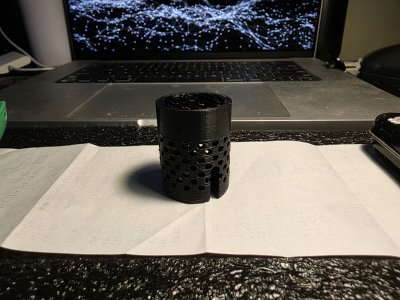
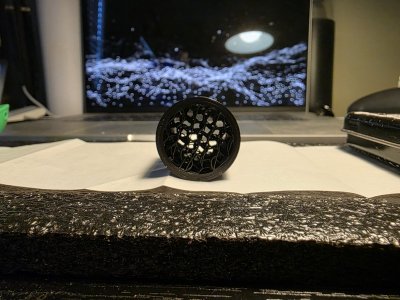
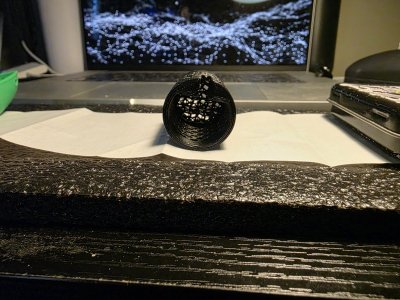
@Hunna I finished a first prototype. It would likely work just fine, but I wanted to improve the fit a little better, and I was assuming your limpets would be bigger than the 2mm holes I used on the sides... but looking again at your picture, I don't think I can safely make that assumption so I need to make some tweaks, I think. Like maybe removing the holes around the perimeter altogether and increasing the infill density.
For some reason I'd been thinking the event was Sunday, not Sat., so... glad I got started last night

Suggestion in the meantime: mark the side of the tank there a little more permanently with your normal high- and low-level lines, because with the cover over it, you won't be able to see the sensor itself.